Fall Cowboy Boots Embroidery Design Review
As an embroidery designer who has spent countless hours hunched over hoops and navigating the chaotic joy of weekend craft fairs, I know that not every digital file translates into a bestseller. When I first loaded the Fall Cowboy Boots Embroidery Design into my software, I was looking for more than just cute aesthetics. I was looking for a workhorse design—something that could carry a product line through the busy Autumn season while remaining practical for batch production. After stitching out several test samples and visualizing them on various goods, I am ready to share my professional assessment of how this design performs in the real world of handmade sales.
First Impressions: Rustic Charm Meets Market Appeal
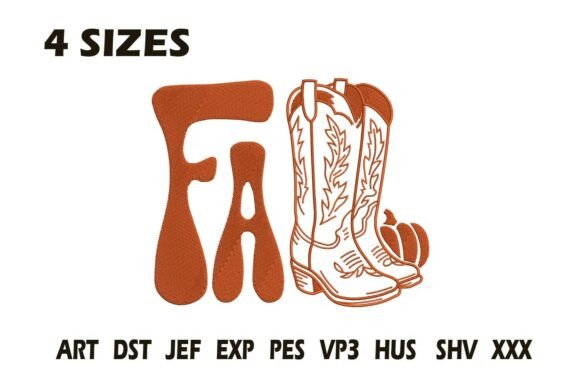
The immediate vibe of this Fall Cowboy Boots Embroidery Design is undeniably rustic with a touch of festive warmth. It does not scream for attention with neon brightness; instead, it invites the viewer in with a cozy, farmhouse aesthetic that is currently dominating the handmade market. For craft fair sellers, this is crucial. Your booth needs to feel cohesive, and this design acts as a perfect anchor for an Autumn-themed display. It feels premium rather than cheap, which is essential when you are trying to justify higher price points for your handmade product offerings.
What stands out most is the balance between detail and simplicity. In a crowded market environment, customers scan tables quickly. A design that is too complex gets lost, while one that is too minimal might be overlooked. This design hits the sweet spot. It is recognizable instantly as a cowboy boot, yet the seasonal elements give it a unique twist that separates it from generic western motifs. It feels decorative enough to be a focal point but soft enough to blend into everyday items.
Product Versatility: From Totes to Tea Towels
The true test of any machine embroidery design is its versatility. I evaluated how this specific file would look across a range of popular craft fair items. Here is where I believe it shines brightest:
- Tote Bag Design: This is arguably the strongest application. Placed centrally on a canvas tote, the boots create a bold statement. The design is large enough to be seen from a distance, making it an excellent eye-catcher for passersby at a market.
- Apron Embroidery: For the home cook or the hostess, an apron featuring this motif feels personal and thoughtful. The rustic theme pairs beautifully with linen or cotton blends, enhancing the perceived value of the garment.
- Tea Towel Embroidery: Kitchen textiles are high-volume sellers. However, caution is needed here. The design must be scaled correctly to ensure it does not overwhelm the narrow width of a standard towel. It works best as a lower-corner accent rather than a center piece.
- Embroidered Patch: If you offer custom patches, this design is ideal. It holds its shape well when cut out, provided you use a sturdy backing. Patches are low-commitment purchases for customers, making them great impulse buys.
- Caps and Hats: Curved surfaces are tricky. While the design is charming, the density of the stitches needs to be monitored. On a structured cap, it can work as a front-panel feature, but on unstructured dad hats, it might pull the fabric if the stitch density is too high.
Production Practicality for the Small Shop Owner
For the Etsy seller or the boutique maker, time is money. A beautiful design that takes four hours to stitch or requires constant thread trimming is not sustainable for a small shop product line. During my review, I focused on the efficiency of this digital embroidery file.
The design appears to be optimized for reasonable run times. It does not seem to have excessive underlay or redundant travel stitches, which suggests it was created by someone who understands commercial production. This is vital for batch production. If you are preparing for a major craft fair, you need to know that you can stitch ten units in a day without your machine overheating or your patience wearing thin. The color changes seem logical, allowing for smooth transitions between the boot leather tones and the autumnal accents.
Photography is another critical factor. This design photographs exceptionally well. The contrast between the typical brown or tan boot colors and the vibrant fall leaves creates a natural pop in photos. For your online listings, this means you spend less time editing images and more time marketing. It creates a strong printable mockup potential because the shapes are distinct and easy to visualize on different backgrounds.
Careful-Use Notes and Technical Considerations
While the design is strong, no file is perfect for every scenario. As an experienced designer, I must highlight some areas where you need to exercise caution to ensure your finished product looks professional.
First, consider the fabric texture. Thick, textured towels or heavy denim can sometimes swallow up smaller details. If you are stitching on a plush towel, ensure that the finer lines of the boot stitching are not lost in the pile. You may need to adjust your tension or use a cut-away stabilizer to keep the design crisp.
Second, watch out for dark fabrics. If you are stitching on black or navy, the traditional earth tones of the boots might not have enough contrast. You will need to carefully select your thread colors to ensure the design remains visible. Sometimes, swapping a dark brown for a lighter tan or adding a cream outline can save the design on darker materials.
Finally, check the hoop size compatibility. Ensure that the design fits comfortably within your standard hoop without requiring excessive re-hooping, which introduces alignment errors. Always check the specific dimensions provided in the file description before committing to a large batch.
Enhancing Brand Consistency and Buyer Engagement
Using a cohesive design like the Fall Cowboy Boots Embroidery Design helps build brand recognition. If your shop specializes in rustic or western-inspired goods, this file reinforces your brand identity. It signals to customers that you curate your design assets with care. When customers see this motif on a tote, then on a pillow cover, and again on a patch, it creates a sense of collection. They are more likely to buy multiple items because they feel part of a set.
Furthermore, this design encourages engagement. It is conversational. Customers at a craft fair love to touch and examine embroidery. The texture of the stitches in the boot leather versus the smoother leaves provides tactile interest. This physical interaction increases the likelihood of a sale. It transforms a simple item into a craft fair product that demands attention.
Final Designer Recommendations
Before you list this as a commercial embroidery product in your shop, take these final steps. First, always test the design on scrap fabric that matches your intended product material. Do not skip this step. Check for puckering and ensure the stabilizer you are using is appropriate for the fabric weight.
Second, verify the licensing terms. The description mentions it is perfect for adding a professional touch, but you must confirm that the license allows for the sale of finished physical goods. Most reputable designers do, but it is your responsibility to check.
Lastly, create at least one high-quality real-world mockup. Place the embroidered item in a styled setting—perhaps next to pumpkins or dried wheat—to showcase its seasonal appeal. This helps customers visualize the item in their own homes.
In conclusion, the Fall Cowboy Boots Embroidery Design is a solid addition to any Autumn collection. It balances aesthetic appeal with production practicality, making it a reliable choice for both novice and experienced makers. With careful attention to fabric choice and thread contrast, this design has the potential to become a staple in your bestselling inventory.